Check a Garden Window for Bird-Collision Risks
Glass can reflect habitat or appear to offer a clear flight path. Record the conditions at the actual window and consult a proven prevention source rather than assuming that one visible ornament solves the problem.
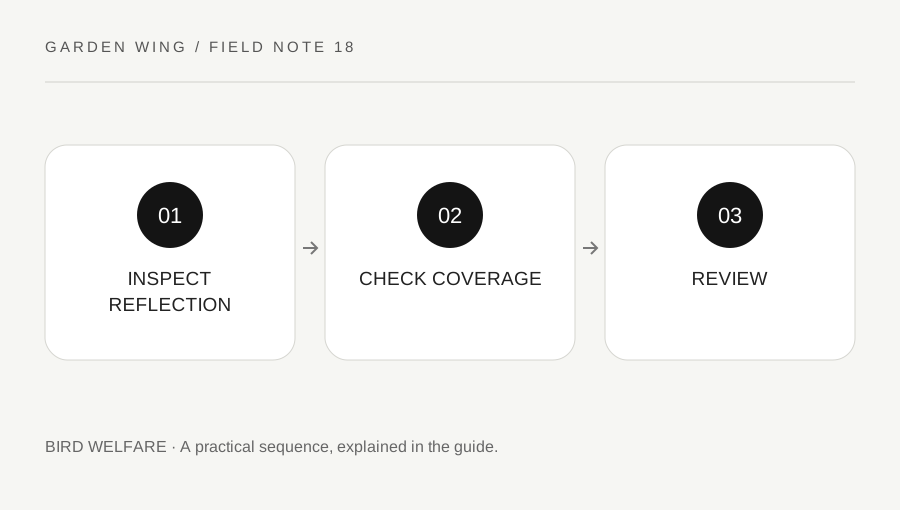
Original explanatory diagram. Numerical examples in this guide illustrate the reasoning; they are not a claim of hands-on testing.
Look from the bird’s side of the glass
From a safe position outside, inspect what the window reflects at different times of day. Trees, sky or vegetation may appear on the surface, while aligned windows can make a building seem to contain a passage. Note the particular panes rather than labeling the entire house uniformly safe or unsafe.
Your inside view is not the same as the outside visual cue. A person who knows a window is present may underestimate how reflective or transparent it appears to a bird. Record changing light and nearby habitat as context without claiming that a short inspection predicts every collision.
Use safe access only. Do not climb or lean from an upper window to complete a garden exercise. If treatment requires work at height or on unsuitable glazing, consult an appropriate installer and a reputable bird-collision prevention source.
Use evidence-based coverage rather than a token mark
Cornell's prevention guidance explains why treatment must make the glass visible in a way birds can recognize, with suitable external patterns or other tested approaches. Read its current spacing and coverage recommendations for the chosen method. A single decorative silhouette generally leaves large apparently open spaces and should not be treated as proof of effective protection.
Check whether an option is designed for the outside surface, the specific glass and the installation conditions. Follow its maintenance requirements. A mark hidden by reflection or a pattern covering only a small corner may not address the pane's full apparent opening.
Keep a record of the method, installation date and any areas left untreated. This makes later inspection possible without relying on memory. The goal is an appropriate visible barrier across the relevant surface, not merely something a human can notice from indoors.
Keep incident notes without handling wildlife
If you notice an apparent collision, record the time, pane and visible circumstances from a distance. Keep people and pets away. Follow local wildlife-rehabilitation guidance for an injured or stunned bird; do not assume that remaining still means recovery is complete, or that flying away proves no harm occurred.
This article does not provide capture or treatment instructions. A qualified local source can advise on the actual situation and reporting process. Avoid moving a bird or administering food or liquid based on a generalized web description.
An illustrative log entry might read “sound heard at front pane at 08:40; small bird on ground; pets excluded; local rehabilitator contacted.” Separate the observed event from any species or injury diagnosis that was not confirmed.
Review after changing the environment
Recheck the surface after seasonal vegetation changes, a new feeder position, lighting changes or replacement glazing. A treatment can wear or detach, and an altered reflection can change the apparent scene. Routine inspection should include the condition and coverage of the chosen method.
An absence of noticed collisions during a short period does not prove zero risk. Some events are missed, and the amount of bird activity varies. Maintain the prevention measure according to its instructions rather than removing it after a quiet week.
For a practical review, compare your original pane notes with the installed coverage and list any unresolved area needing advice. Use the official prevention reference for the technical details. A garden record can organize action and follow-up, but the effectiveness claim should come from the tested method and correct installation, not from an observer's confidence or a decorative appearance.
A practical checklist
Tick items for your own use. This checklist is saved only in this browser.
Questions that come up
Does one hawk-shaped sticker make a pane safe?
Do not assume so. Large untreated spaces can still appear passable. Follow a reputable prevention source’s coverage and spacing guidance.
Does flying away prove a struck bird is unharmed?
No. Seek appropriate local wildlife guidance after a suspected collision rather than assuming the visible departure establishes recovery.
Can a quiet week prove the treatment works perfectly?
No. Events can be missed and bird activity varies. Rely on a tested method, correct installation and ongoing maintenance.
References & scope
Background references checked on 18 October 2026. The examples and practice exercises are original editorial explanations, not copied procedures or professional advice.
- Cornell Lab: All About Birds identification guide
- Cornell Lab: bird feeder cleaning
- RSPB: bird identification guide
- RSPB: current garden bird health guidance
- RSPB: current feeding advice
- Cornell Lab: American Robin
- RSPB: Robin
- RSPB: Blackbird
- American Birding Association: Code of Birding Ethics
- RSPB: bird-bath guidance
- Cornell Lab: preventing bird-window collisions
- BTO: identification resources
- RSPB: Starling
- Cornell Lab: finding a baby bird
- RSPB: injured birds and local help