Bird Sounds: Make a Useful Note Before Naming the Caller
You can learn from an unidentified sound. Describe its rhythm, pitch movement and repetition, then compare a regional reference without broadcasting playback into the garden.
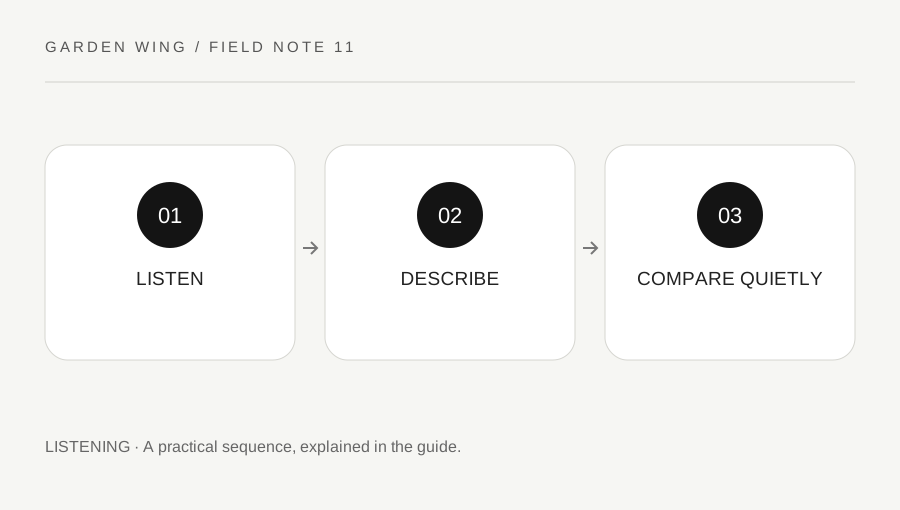
Original explanatory diagram. Numerical examples in this guide illustrate the reasoning; they are not a claim of hands-on testing.
Separate hearing from seeing
When you hear a sound, note whether you also saw the bird producing it. A visible bird nearby is not automatically the caller. Several birds can be present, and sound can seem to come from a different direction because of reflections or cover.
Write “heard only” when appropriate. For a formal survey, follow its distinction between detection method and identification evidence; a project may define these fields precisely. Your private notebook can use simple labels, but those labels should not be assumed to match a scientific recording protocol.
Choose a short listening period from a settled position. Do not repeatedly walk toward the sound to force a visual match, especially where nesting activity may be involved. An unidentified repeated call can remain a valuable learning observation without a species name.
Describe pattern in ordinary language
Listen for the number of notes in a repeated phrase, the spacing between phrases and whether the pitch rises, falls or remains similar. You might write “three short high notes, pause, repeated” or “rough repeated chatter from hedge.” These are memory aids rather than standardized acoustic measurements.
Use a rough line sketch for pitch direction if useful. Keep timing approximate unless you actually measured it. Avoid an exact frequency claim from a casual impression; high and low are relative descriptions in this context.
Onomatopoeic words can help you remember a sound, but different listeners write them differently. Pair a sound word with rhythm and context so that another person can understand what you meant. Record background traffic, wind or overlapping sounds if they limited what you could hear.
Compare references without disturbing birds
Use a trustworthy regional reference with labeled recordings. Listen privately indoors or through headphones at a safe level rather than playing the sounds aloud into the garden. Playback can provoke a response, particularly during territorial or breeding activity, and is unnecessary for a casual learning session.
Compare more than one recording because birds can produce several calls and songs. A single matching fragment is not always decisive. Check whether the candidate occurs locally and whether any visible evidence agrees. A tool-generated suggestion should remain a candidate until the evidence supports it.
The garden shortlist does not analyze audio and makes no recognition claim. If you use another app, review its permissions and whether recordings leave your device. A private note on this site is not an uploaded sound file or an official biological record.
Keep a sound-learning page for one familiar bird
Select one common local species you can identify visually. During later quiet sessions, try to connect its visible bill movement with the sound while maintaining distance. Note the circumstances and whether the association was clear. This builds a reliable reference from a familiar bird rather than a large collection of guessed sound names.
An illustrative entry could read “confirmed robin visible on fence; repeated short phrase; traffic obscured first note.” A later heard-only record can refer back to that experience but should retain its own uncertainty. Similar sounds and individual variation remain possible.
Finish by choosing one feature to listen for next time, such as phrase length or a descending ending. Small, repeated comparisons are easier to review than a long list of phonetic spellings without context. Preserve the distinction between noticing a sound, suggesting a source and confirming which bird made it.
A short recording made for private study should retain its date and broad location. Follow local rules and respect conversations or private sounds captured incidentally; do not publish an unreviewed recording merely because it contains a possible bird call.
A practical checklist
Tick items for your own use. This checklist is saved only in this browser.
Questions that come up
Can I identify a caller just because a bird was nearby?
Not reliably. The visible bird may not have produced the sound. Seek direct association or keep the sound identification tentative.
Does this tool identify recordings?
No. It filters a small species list from your manual choices and never requests microphone access.
Should I play a call to make the bird respond?
Avoid provoking a response for casual identification. Compare recordings privately and let the garden activity continue normally.
References & scope
Background references checked on 18 October 2026. The examples and practice exercises are original editorial explanations, not copied procedures or professional advice.
- Cornell Lab: All About Birds identification guide
- Cornell Lab: bird feeder cleaning
- RSPB: bird identification guide
- RSPB: current garden bird health guidance
- RSPB: current feeding advice
- Cornell Lab: American Robin
- RSPB: Robin
- RSPB: Blackbird
- American Birding Association: Code of Birding Ethics
- RSPB: bird-bath guidance
- Cornell Lab: preventing bird-window collisions
- BTO: identification resources
- RSPB: Starling
- Cornell Lab: finding a baby bird
- RSPB: injured birds and local help