Quiet Backyard Birding: Give the Bird an Easy Way to Leave
A useful bird encounter does not require getting closer. Make observation predictable, protect nesting and resting birds, and accept that some details should remain unrecorded or unshared.
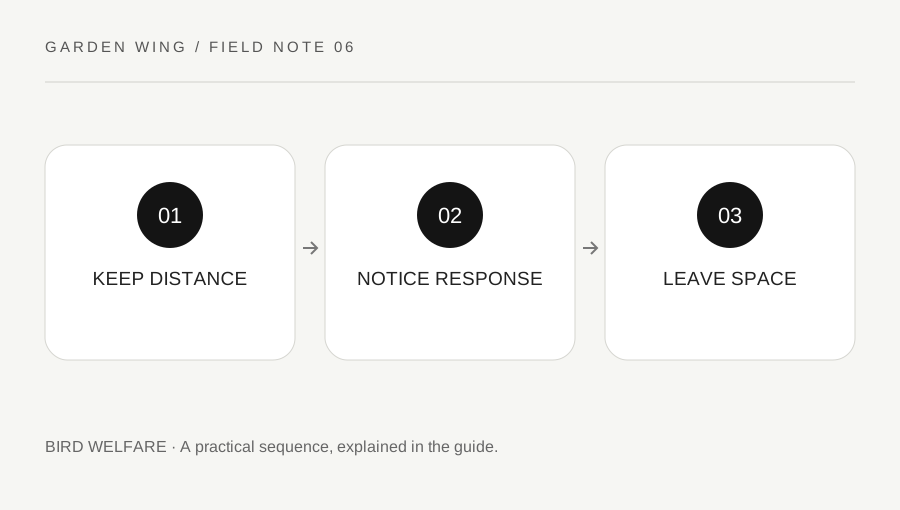
Original explanatory diagram. Numerical examples in this guide illustrate the reasoning; they are not a claim of hands-on testing.
Begin with a low-impact position
Choose a spot where ordinary garden activity can continue without directing attention toward a particular bird. A window often provides a useful observation point. Settle before watching and avoid repeatedly standing, waving or crossing the lawn to improve the angle. If a bird leaves, do not treat that as an invitation to follow it from perch to perch.
There is no single distance that guarantees every bird is comfortable. Species, season, cover and individual circumstances differ. Watch for changes associated with your presence, such as repeated alarm calls, interrupted feeding or an adult hesitating with food. These signs are not a complete diagnostic list, but they are reasons to increase distance and reduce attention rather than waiting for obvious flight.
Protect nests by limiting attention
If you notice nest-building or adults carrying food, avoid repeatedly checking the destination. Do not move vegetation to reveal a nest or adjust its surroundings for a clearer view. A nest can be present without being visible, so respect behavior that suggests breeding activity even when you have not located a structure.
Keep exact nest locations out of public notes and avoid encouraging others to approach. Local protections for wild birds, eggs and nests vary; consult the relevant wildlife authority if a garden project may affect a nest. This article gives observation principles rather than legal advice. Postpone intrusive work when needed and seek local guidance rather than assuming an apparently empty nest is inactive.
Avoid provoking a performance
Do not use playback, repeated imitation or food placement to force a bird into a more convenient position for a casual garden list. A response may look like a successful observation while imposing an unnecessary distraction. Listening to reference recordings privately for learning is different from broadcasting them into a bird's territory.
If you use an identification app, learn its privacy and audio behavior before taking it outside. Turn down media volume and avoid accidental playback. A tentative identification should remain tentative even when an app presents a confident-looking label. Your direct observations and a suitable field reference still matter. The garden candidate finder uses broad manual filters only and does not analyze recordings or photographs.
Make the garden setting predictable
Consider pets, reflective windows and frequently used paths as part of the observation environment. Keep pets away from an active watching area when practical. Consult a reputable local bird-conservation source about reducing window-collision risks if birds regularly strike glass; a private log is useful for documenting incidents but does not address the hazard by itself.
Feeding decisions need their own regional health review. More food is not automatically better, and an unmaintained setup can create problems. Watch natural activity if you cannot sustain the appropriate maintenance. Avoid introducing a new feeding arrangement merely to complete a species checklist. A quiet garden session can be worthwhile even when the only observation is one familiar bird using existing cover.
Share a record with its limits
When describing an encounter, distinguish a confirmed identification from a candidate and an exact count from an estimate. Give a broad area and date when appropriate, but withhold sensitive locations. If you are unsure whether a sighting is sensitive, check the guidance of the monitoring project or local conservation body before posting details.
At the end of a session, review one question: did the bird have an easy option to continue its activity or leave without being followed? If you changed the scene repeatedly to gain a better view, simplify the next session. Ethical observation is a practical habit built from small decisions. Leaving an uncertain identification unresolved can be the correct outcome when obtaining more evidence would impose avoidable disturbance.
A practical checklist
Tick items for your own use. This checklist is saved only in this browser.
Questions that come up
Is flushing a bird acceptable if I only need a quick identification?
Do not deliberately make a bird move for a casual identification. Record the evidence available from a respectful position and accept an unresolved result.
Should I publish the exact nest location?
Avoid sharing precise nest locations publicly. Follow the rules of any official reporting project and local conservation guidance.
Does a bird staying nearby prove it is comfortable?
No. A bird may remain because it is guarding a nest or lacks a better option. Observe its behavior and reduce your presence when in doubt.
References & scope
Background references checked on 18 October 2026. The examples and practice exercises are original editorial explanations, not copied procedures or professional advice.
- Cornell Lab: All About Birds identification guide
- Cornell Lab: bird feeder cleaning
- RSPB: bird identification guide
- RSPB: current garden bird health guidance
- RSPB: current feeding advice
- Cornell Lab: American Robin
- RSPB: Robin
- RSPB: Blackbird
- American Birding Association: Code of Birding Ethics
- RSPB: bird-bath guidance
- Cornell Lab: preventing bird-window collisions
- BTO: identification resources
- RSPB: Starling
- Cornell Lab: finding a baby bird
- RSPB: injured birds and local help