Spring Behavior Notes: Record Evidence Without Finding a Nest
Carrying material, repeated singing and food-carrying can be interesting observations. Describe the action from a distance without turning it into an instruction to locate or inspect a nest.
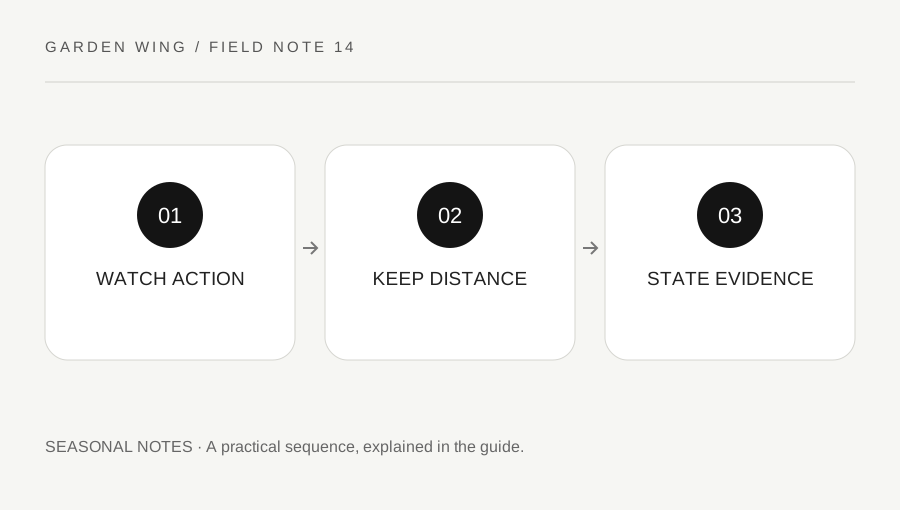
Original explanatory diagram. Numerical examples in this guide illustrate the reasoning; they are not a claim of hands-on testing.
Name the action rather than the conclusion
A bird carrying a twig has been seen carrying material. That observation may be relevant to breeding, but it does not show you the contents, condition or outcome of a nest. Write the material and direction only as clearly as you saw them: “thin dry stem carried into hedge” is more precise than “nest completed.”
Repeated song can be another useful seasonal observation, but song alone does not prove a pair, eggs or young. Keep the difference between evidence and interpretation visible. A formal breeding survey may assign codes to particular behaviors; use those definitions only when following that project's instructions.
Choose a position that does not block the bird's route. If it hesitates, changes course or repeatedly alarms in association with your presence, move away. Obtaining a more detailed note is not more important than allowing normal activity to continue.
Avoid converting a route into a search
Seeing a bird disappear into vegetation does not require following it. Do not part branches, touch a structure or stand beside the suspected destination waiting for an adult to return. Repeated attention can disturb the behavior you hoped to understand and can reveal a sensitive location to other people.
Record a broad patch description such as “back hedge” in your private notes, keeping precise location details out of public sharing. Local laws protecting birds, nests and eggs can apply; consult the relevant authority before garden work that may affect active nesting.
An illustrative note might read “adult candidate carried food toward hedge twice; observation ended to reduce attention.” The deliberate end of the session belongs in the record. It explains why the evidence stops there without implying that the observer failed to complete a necessary inspection.
Use repeated behavior carefully
Several trips with food can strengthen the description of a repeated action, but they do not establish how many young are present or whether every trip reached the same destination. Keep the count tied to visible events rather than converting it into a nest census.
If the species identification is uncertain, preserve that uncertainty alongside the behavior. “Unidentified small bird carrying food” is better evidence than a confidently named species based only on the fact that a familiar adult was nearby earlier. Do not combine marks from different birds into one inferred individual.
Compare the regional species reference after the session. It can explain typical nesting behavior, but typical behavior does not prove the specific situation in your garden. Use the source to understand possibilities and decide what can be observed respectfully from your ordinary position, not to design a closer inspection route.
Make a season summary at the supported level
At the end of a few spring sessions, list the distinct behaviors actually recorded: song, paired presence, material carrying or food carrying. Note dates and effort. You can summarize “food carrying observed on three watches” without claiming the date eggs hatched or the number of chicks.
If garden maintenance is planned near the active area, seek current local guidance rather than deciding from an old note that nesting has finished. A quiet day does not prove inactivity. Likewise, a structure that looks empty from your viewing position may not be safe to disturb.
Finish with a short review of your own method: whether the observation position stayed consistent, whether birds changed behavior when you appeared and whether public notes reveal too much. A useful spring record can remain modest. Protecting the activity and describing its limits gives the evidence more value than an elaborate but intrusive nest story.
A practical checklist
Tick items for your own use. This checklist is saved only in this browser.
Questions that come up
Does carrying food prove how many chicks exist?
No. It is a behavioral observation. It does not establish nest contents, chick number or the destination of every trip.
Should I wait beside the hedge for the adult to return?
Do not create a repeated close-watch situation around a suspected nest. Return to a distant ordinary viewing position or end the session.
Can I use formal breeding codes in my notebook?
Only with an understanding of their definitions. If contributing to a project, follow its protocol rather than inventing your own interpretation of its codes.
References & scope
Background references checked on 18 October 2026. The examples and practice exercises are original editorial explanations, not copied procedures or professional advice.
- Cornell Lab: All About Birds identification guide
- Cornell Lab: bird feeder cleaning
- RSPB: bird identification guide
- RSPB: current garden bird health guidance
- RSPB: current feeding advice
- Cornell Lab: American Robin
- RSPB: Robin
- RSPB: Blackbird
- American Birding Association: Code of Birding Ethics
- RSPB: bird-bath guidance
- Cornell Lab: preventing bird-window collisions
- BTO: identification resources
- RSPB: Starling
- Cornell Lab: finding a baby bird
- RSPB: injured birds and local help